Complete Guide for White Water Rafting at Rishikesh

I did not know swimming when I attempted white water rafting at Rishikesh. Initially, it was a scary thought as people told me not to do it and on top of that, hearing stories of raft overturning had me even more anxious. These words by Pandit Jawahar Lal Nehru truly describe my first rafting experience, “We live in a wonderful world that is full of beauty, charm and adventure. There is no end to the adventures that we can have if only we seek them with our eyes open”.
What is White Water Rafting

Whitewater Rafting got its name because when the raft goes through turbulent and rough rapids of a river, the water appear frothy white.

Grades of rapids

Rapids are graded based on their difficulty level, Grade 1 being the easiest.

Grade 1: Very small rough areas

Grade 2: Some rough waters, small rocks and a small drop

Grade 3: Slightly adventurous rapids with 3-4ft drop (not dangerous)

Grade 4: Longer rapids with sharp maneuvering and considerable drop (might overturn the raft)

Grade 5: Larger waves and bigger rocks with a large drop

Grade 6: Huge rocks, huge waves and significant drops (considered ‘suicidal’)

It is a common misconception that only people who know swimming can do rafting. Even if you do not know swimming, you may raft but do not attempt stretches with rapids of grade 4 and above.

Things to carry

If you want to pack light, you may just carry an extra pair of clothes and inners(dry fit clothes are best for river rafting), sandals/sneakers/crocs, sunscreen lotion, waterproof pouch for phone/camera/money and water.

Why choose Rishikesh for White Water Rafting

Nestling in the lap of the Ganges which stretches approximately 37 kms in length, one can explore the thrill of its untamed currents at Rishikesh rafting along with the view of magnificent Shivalik hills.

How to reach: Popularly known as the River Rafting Capital of India, Rishikesh is situated 224 kms from Delhi which makes it a perfect weekend getaway. It takes about 6 hours to reach by road from Delhi. If you are traveling by train, Haridwar Junction is the nearest station(21kms). If you are traveling by air, Dehradun is the nearest airport(21kms). From Haridwar or Dehradun, you can take a cab or bus to Rishikesh. It is better to book your own cab so that it will be easier to move around from the rafting site to the camp site(usually, people prefer camping by river side at night).

Where to stay: It is advisable if bookings are done beforehand(specially, if you are going over weekends and want to stay at river-side campsites). Many travel agencies offer different packages, most popular one being 2 days and 1 night package, which involves rafting, river-side camping, cliff jumping and body surfing. The average cost incurred would be around Rs. 2000 per person.

Best time for rafting in Rishikesh: Best time for rafting is early March to first week of May and then late September to mid November.
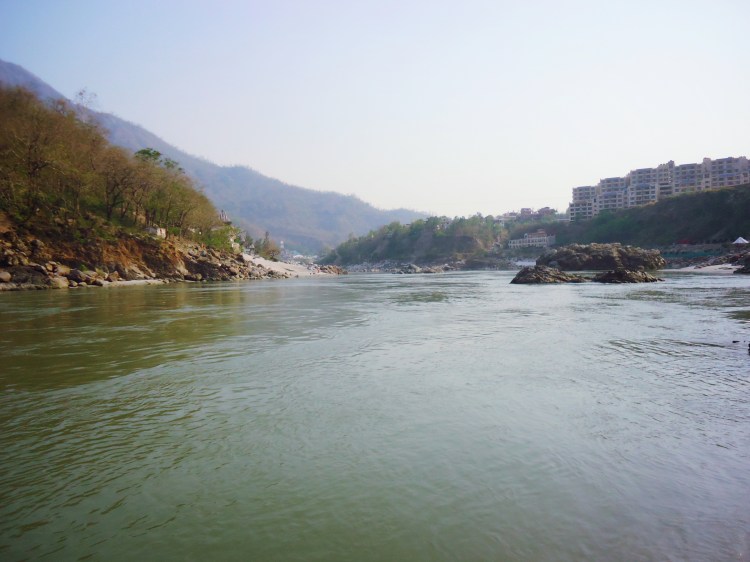
Scenic view of the Ganges and the Shivalik

Different Rapids in Rishikesh

From Kaudiyala to Rishikesh, there are a total of 16 rapids(from Grade 1 to Grade 5) along the 36kms stretch. Best part about rafting here is that there are four starting points for rafting and each point offers rapids of different grades. So, whether you are an amateur rafter or a seasoned veteran, there is something in store for every kind of adventurous spirit in you.

First Starting Point: Brahmapuri (9km, 1.5-2 hrs, rapids upto grade 2, Rs. 450-500/person*)

Second Starting Point: Shivpuri (16km, 3-3.5 hrs, rapids upto grade 3, Rs. 650-700/person*). This is the most popular stretch for rafting as it is a perfect blend of adventure along with safety for beginners.

Third Starting Point: Marine drive (27km, 4-4.5 hrs, rapids upto grade 3, Rs. 850-900/person*)

Fourth Starting Point: Kaudiyala(35km, 6-7 hrs, rapids upto grade 5, Rs. 1800-1900/person*). You will encounter one of the most challenging and world famous rapid ‘The Wall’ over here. Only seasoned experts are advised for this point.

* The cost mentioned with each starting point is only the cost of rafting.

Some of the famous rapids at Rishikesh are: Sweet Sixteen(Grade 1), Body Surfing Rapid(Grade 1), Club House Rapid(Grade 2), Cross Fire(Grade 3), Three Blind Mice(Grade 3), Roller Coaster(Grade 3), Golf Course(Grade 3), Return to Sender(Grade 3) and The Wall(Grade 4).

My experience of White Water Rafting at Rishikesh

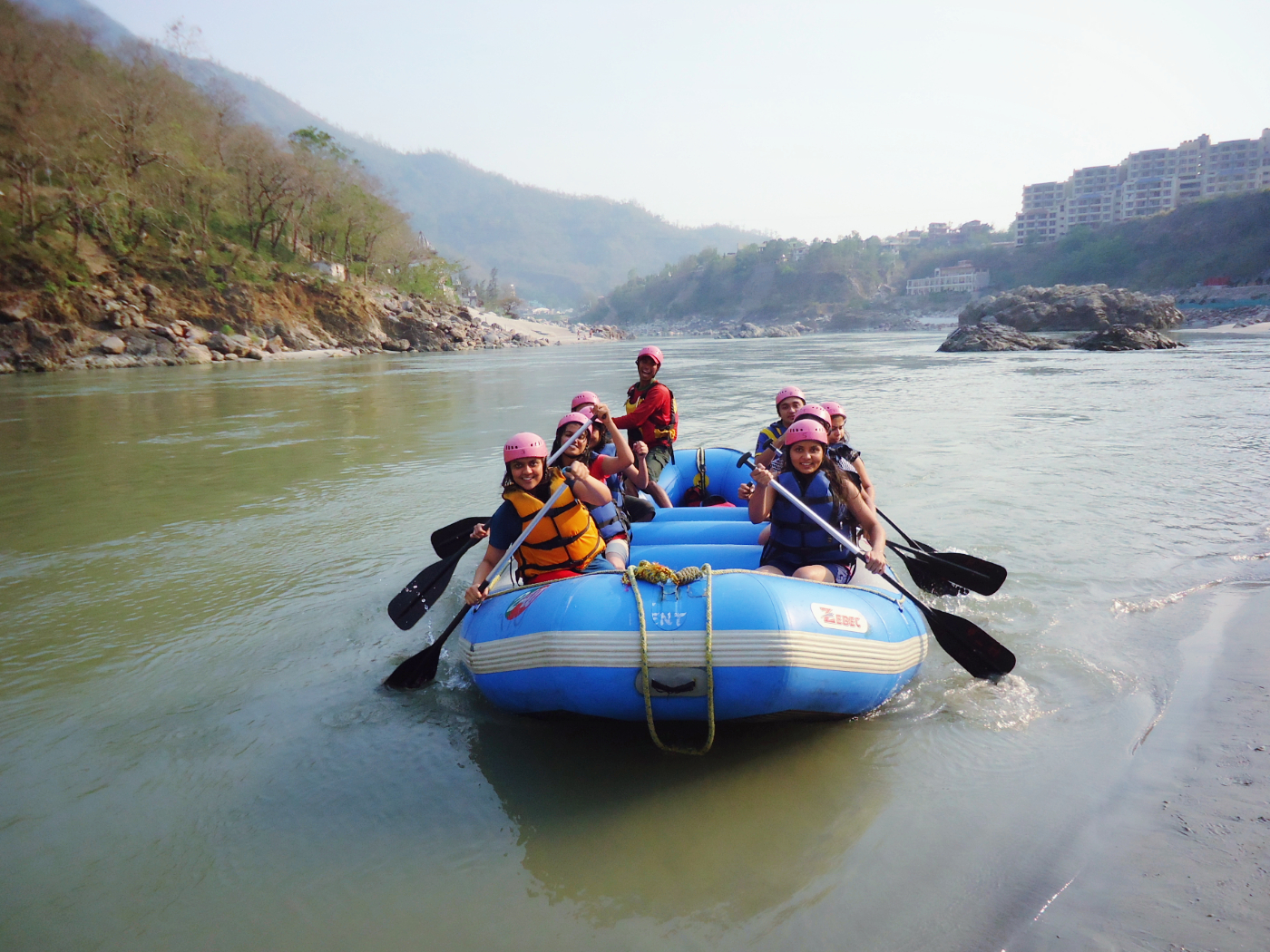
We booked an eight-seater raft and were all set to start rafting from Shivpuri. We watched excitedly as our guide started pumping air into the raft and we would be the next ones to raft away into the Ganges. After a brief training session where we were given instructions(a few, not much) and precautions to be followed, we stepped onto our raft with much enthusiasm. If you have prior experience in rafting, you would be lucky to sit at the helm of the raft where the major action is. With life jacket, helmet, paddles in place and foot in ‘lock’ position, we chanted ‘Jai Ganga Maiyya Ki’ and started our journey.
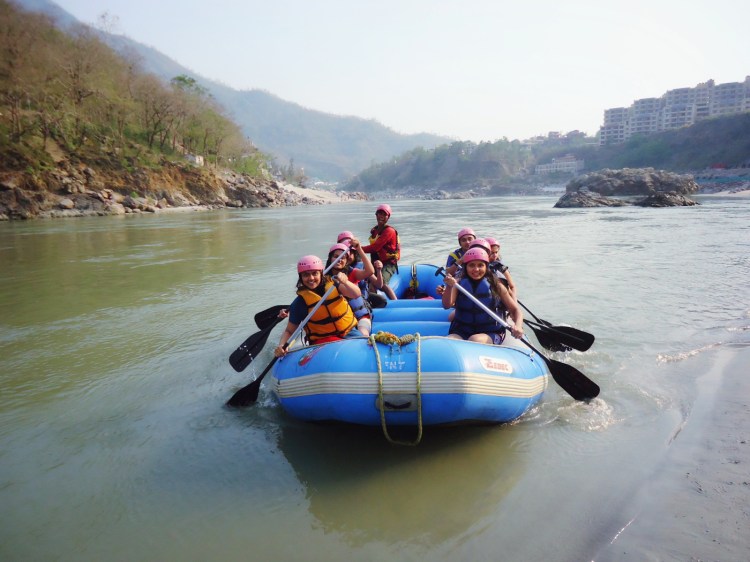
Initially, we floated and practiced how to paddle in unison. The key to rafting is to move your paddle hand in sync with that of the person sitting in front of you. We were totally enticed by the scenic view, cool breeze, calmness and sound of the river.

Then we saw our very first rapid nearing. Fueled with energy, we paddled excitedly as the rapid engulfed us. Though our guide said it was an easy one, we were so happy that we crossed it and were safe(how naive we were!). Our guide told us to paddle in unison and not be nervous else we would risk toppling the raft.

Next rapids we encountered were tough ones(grade 3). As the river flow increased, from afar we saw river falling with a thud and water gushing out. No more was there a calmness in the sound of river. The waters roared. Our guide yelled, ‘This is going to a tough one, use your strength to paddle faster and harder’. In the blink of an eye, high waves formed in front of us. Those untameable waves thrashed us.. up and down.. left and right, with full force and rocked our raft. We paddled as though our life depended on it, feeling the adrenaline rush every second as we tumbled along those harsh currents. Our mind went blank and we were sure we would fall into the river but the guide kept yelling to paddle in sync. We passed the rapid and it was an experience like no other. So surreal! So unbelievable! We shouted and cheered with our paddles in air that we survived. It was a moment of sheer exhilaration.

As there was a little time till the next set of rapids came, we stopped paddling and just floated along. This was important as we had to save our energy for the rapids. Then the guide told us to jump in the river. Our hearts pounded and with bewildered faces, we asked “Aren’t we supposed to be safely in the raft and avoid any contact with the river”. But the guide said that since we were in plains, we might as well take a dip in the Ganges and have fun. As I stated earlier, I did not know swimming(can’t stress that enough!), I was scared to jump in a flowing river. Guide told us to grip the rope tied along the raft and jump and nothing would happen. One by one, we all jumped in the Ganges and the feeling was unmatched. As we rested and played in those calm waters and gazed up at the blue sky, it added more fuel to our adventure.
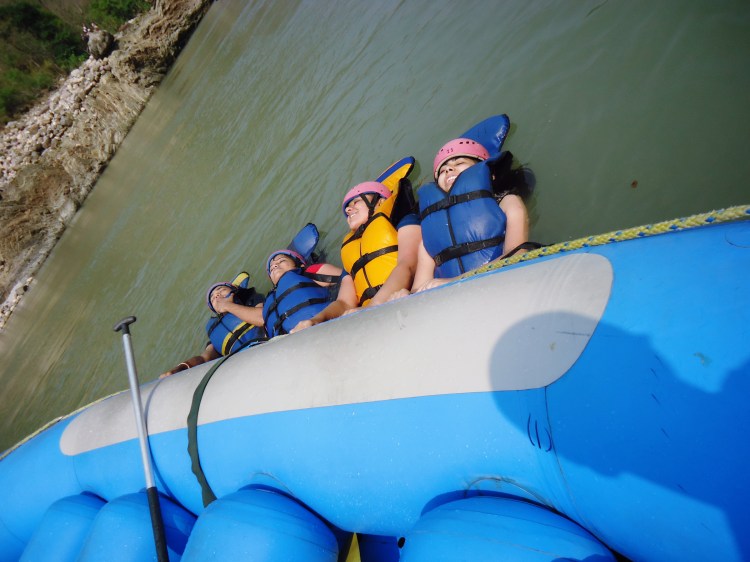
After a few more rapids, we took at pit stop. What better way to re-energize yourself than to savor maggie noodles with a steaming mug of tea. It felt soothing after being drenched in cold water.
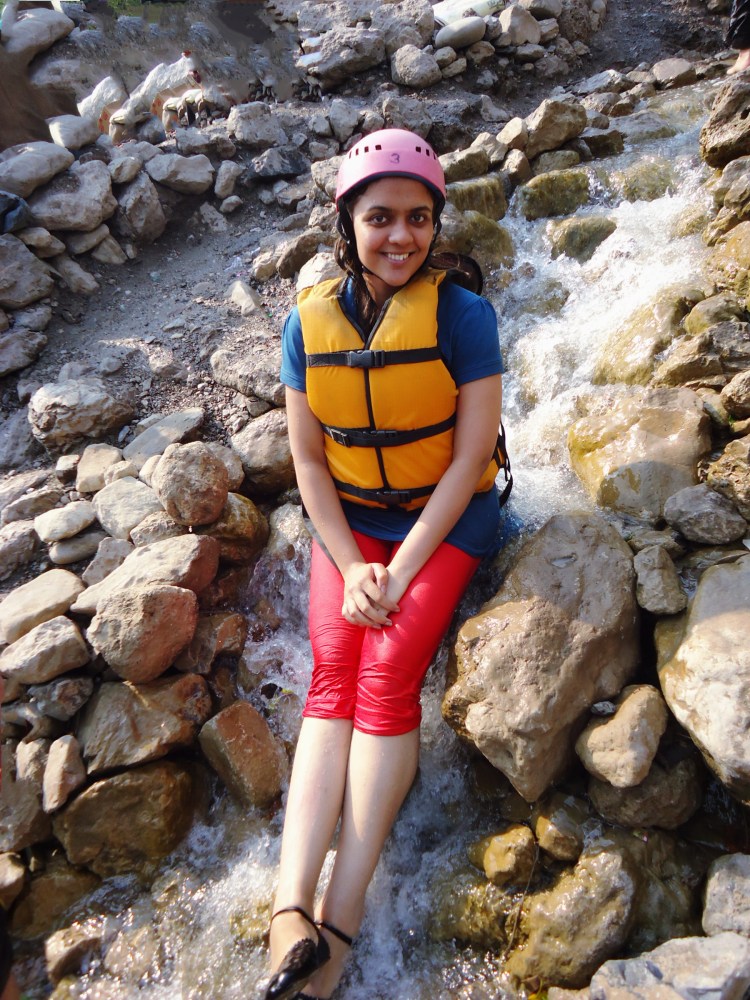
Maggie Point

We resumed rafting and covered the remaining rapids. As the evening neared, so did the end of our rafting journey.
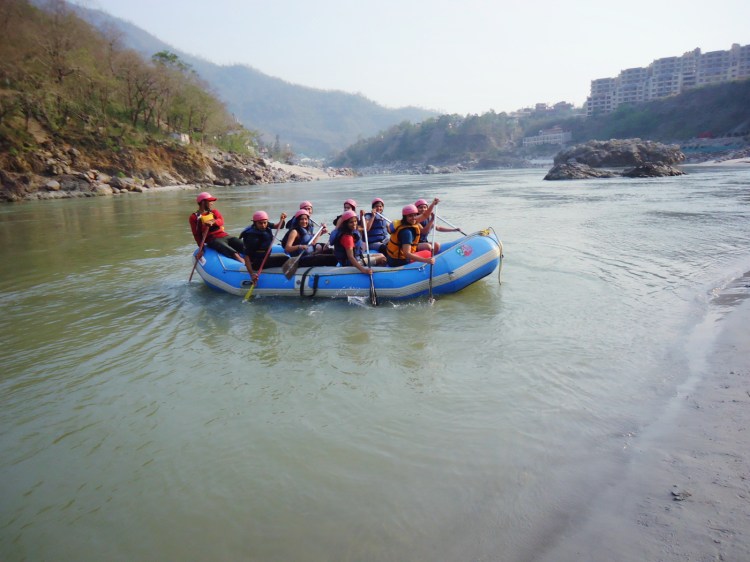
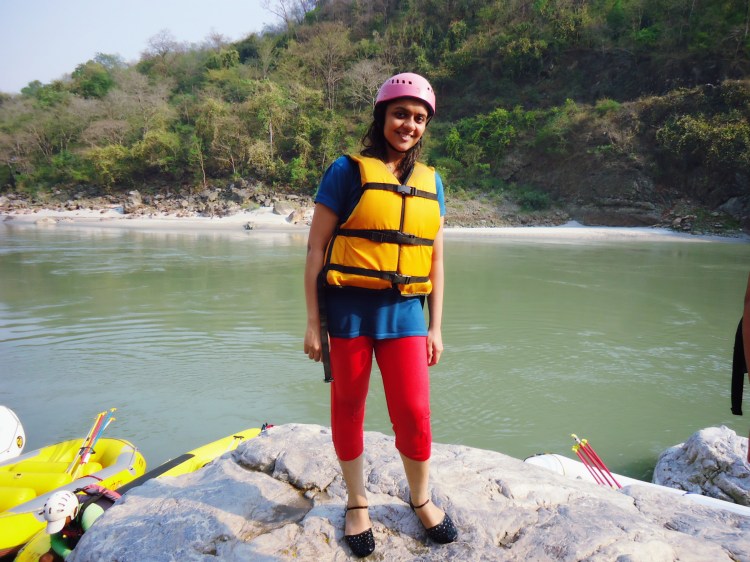
Initially, I was hesitant for rafting because I did not know swimming, but after this experience, I discovered many things about myself. I was overjoyed because I felt I had conquered my fear. Lynn Culbreath Noel has rightly said, ” The first river you paddle runs through the rest of your life. It bubbles up in pools and eddies to remind you who you are”.
Lessons learnt from White Water Rafting

There is no ‘I’ in the team. No one can do everything alone and many a times, one hundred percent team work is essential.

Just as a river is full with rocks(some you can spot and some you can’t), life is full of obstacles. But never give up. With a firm footing and head above water, the tough will always get going when the going gets tough.

Life will not always be comfortable. Sometimes, you will be riding smoothly, sometimes, you will have water splashed across you. You don’t know what lies ahead. So just go with the flow and enjoy the ride while it lasts.

It is very important to pause for a while, relax and enjoy the moments that life gives you.
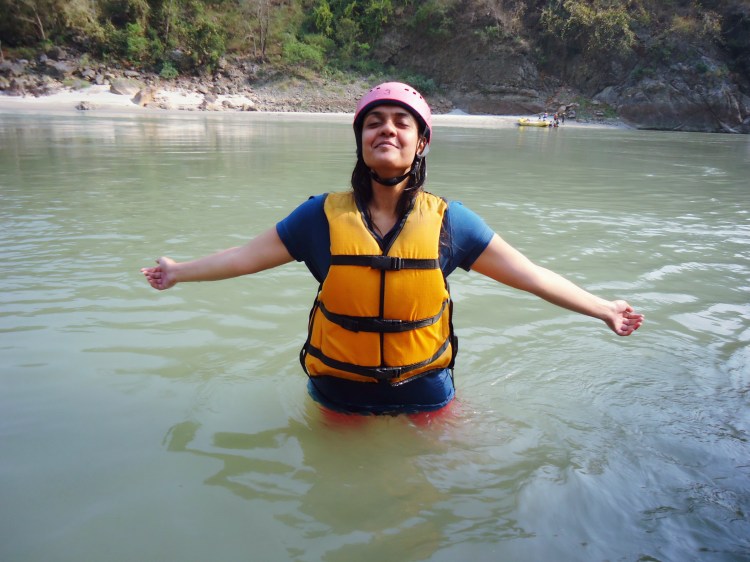
True happiness lies at the end of your comfort zone

My 1-day trek to Matheran from Mumbai

“I go to nature to be soothed and healed, and to have my senses put in order.”

John Burroughs

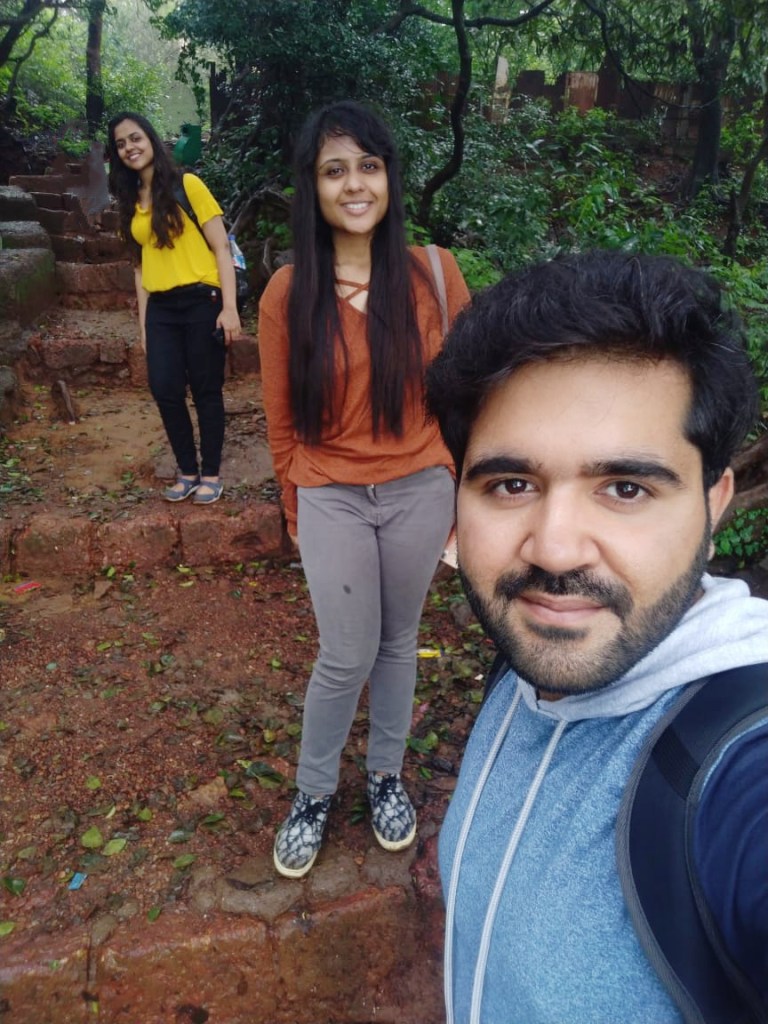
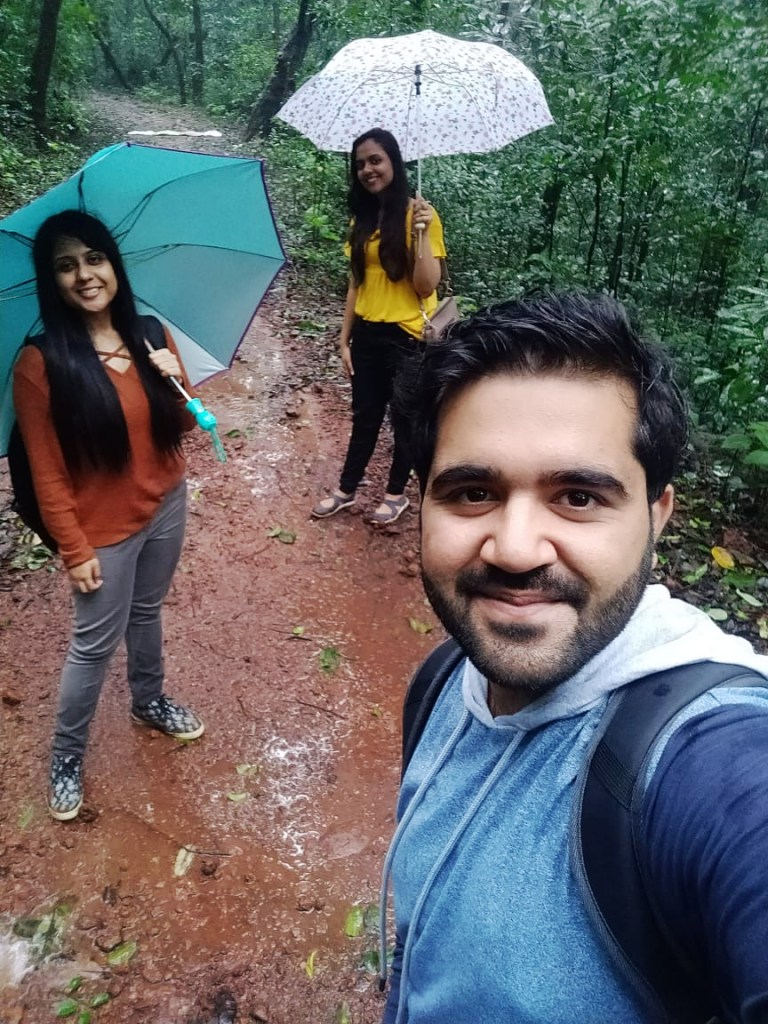
I have never done a rain forest trek. Though this term is a little far-fetched for Matheran, but as I went there in mid-June, trust me, amidst heavy rains and winds and muddy tracks, it didn’t seem any less than an adventure.

History of Matheran

Matheran (meaning – forest on top) is a hill station, located on the Western Ghats, about 90 km from Mumbai. It is Asia’s only automobile free hill station. It was discovered by the British in 1851 and was one of their popular resorts. While strolling around Matheran, you will see many buildings representing British Colonial architecture.

Best time to visit

As I went in mid-June, I kept getting drenched in heavy rains every now and then(which actually made the trek more fun). But if you want to avoid these heavy downpours, then October to March is the best time.

Things to carry

You just need to carry an umbrella/raincoat, a waterproof cover for your phone and camera, water-bottle(prefer carrying your own bottle so that plastic bottles may be avoided), snacks, band-aids and trekking shoes(if you are going during monsoon, WEAR CROCS ONLY, else wear trekking shoes). Carry some cash because once you enter Matheran, there is only one ATM in Matheran city and online payment modes are not reliable due to network problems.

How to reach Matheran

Take the Karjat bound train from CSMT and get down at Neral. It is a fast local with around 90 min of journey and will cost you Rs. 25 for general class and Rs. 210 for First class. If you are boarding from CSMT, then you can travel in general class with ease as seat will be guaranteed. But if you are boarding after a few stations, you will be crammed in general class even if you manage to board it (without hanging out of the train). That being said, you can imagine the crowd that goes to Matheran during peak season! From Neral, there are two options to reach Matheran.

Option 1: From Neral, take a sharing cab which charges Rs. 80/person and will drop you at the car-parking stop within 20-30 min. The route is scenic and if the weather is nice, it will be worth it.

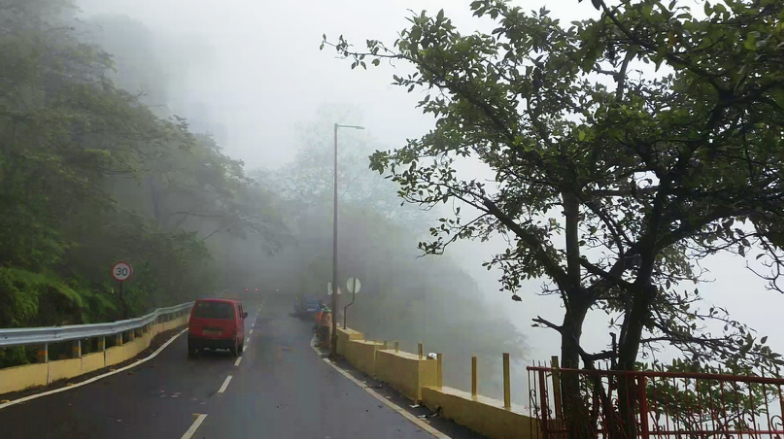
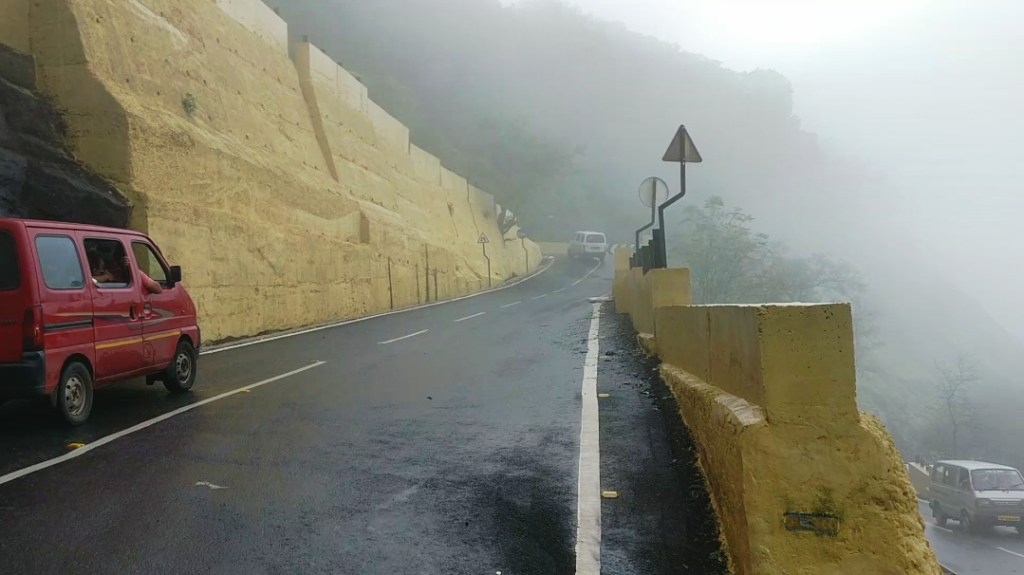
Cab journey from Neral Station to Matheran
Scenic route to Matheran

Then, it is a 20 min walk to Matheran entry gate where you will have to pay an entry fee of Rs.50/person and voila, you have entered Matheran! Trek through the misty train tracks and scenic valley and you will reach Matheran Station in 1-2 hrs depending on your pace and random pit stops taken for photography!

Option 2: From Neral, take the toy train to Matheran station (cost Rs.300 for first class and Rs.75 for second class) which will take about 2 hrs to reach Matheran Station(imagine the snail speed!). Tickets can be booked only at Neral and you have to reach 30-60min before the scheduled departure from Neral(as tickets get sold out in peak seasons, specially on weekends). Also, remember that the frequency of toy train is limited to 1-2 times arrivals and departures only.

Time taken is roughly the same in both cases, but the experience is totally different. You can also experience both, but for that, you will have to reach Matheran early, take Option 1, finish sightseeing some points and go back by Option 2. This will be too hectic as the toy train has specific departure time with limited frequency. Most of the people prefer Option 1 unless there are elderly people. Let me take you through Option 1 , after entering Matheran gates.

Begin your journey from Matheran entry gate

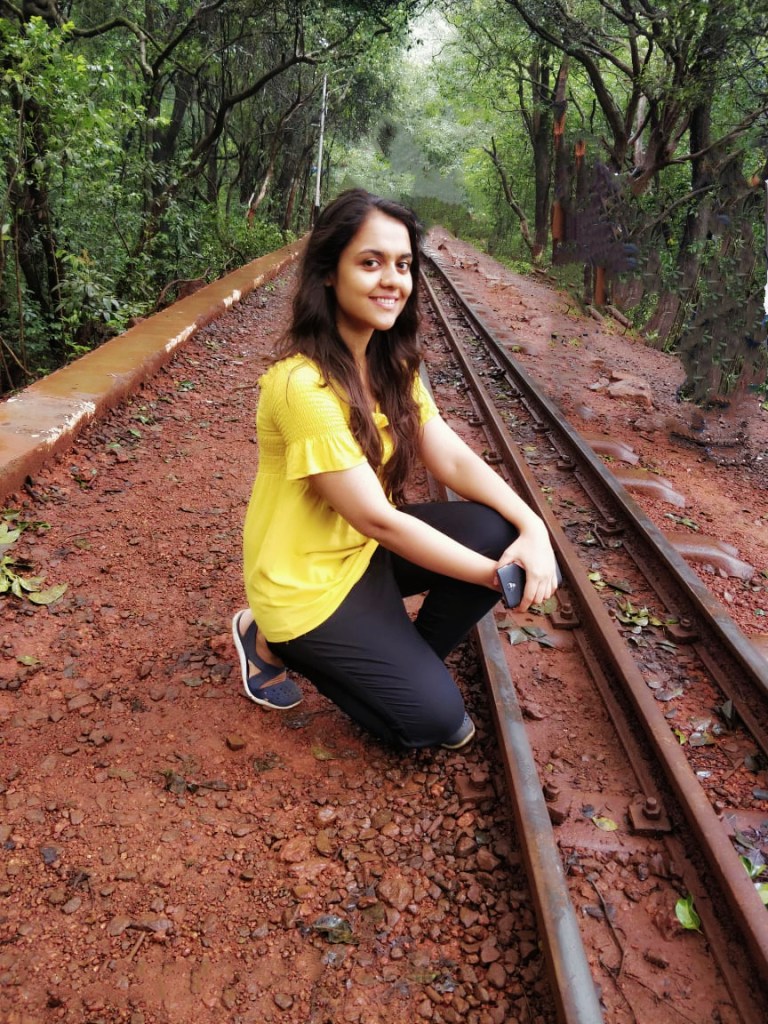
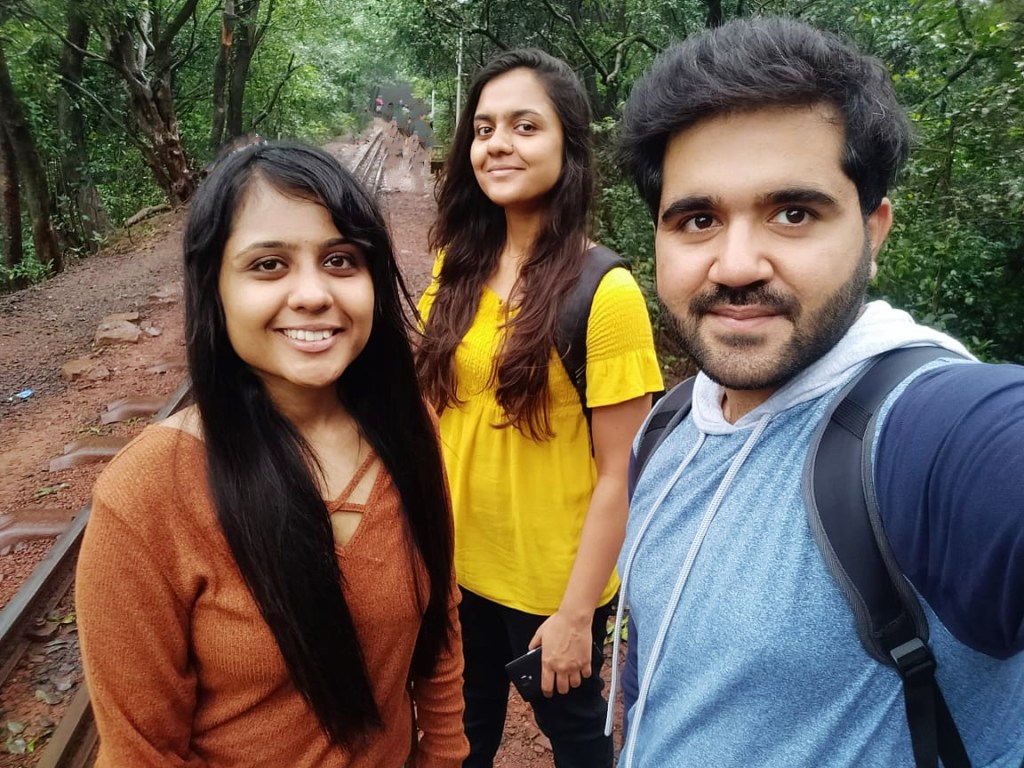
Green forests and misty environment will leave you in awe of the beauty of Matheran. You might also see a toy train passing by you as you trek your way up to the hills along the train tracks.

Toy train tracks

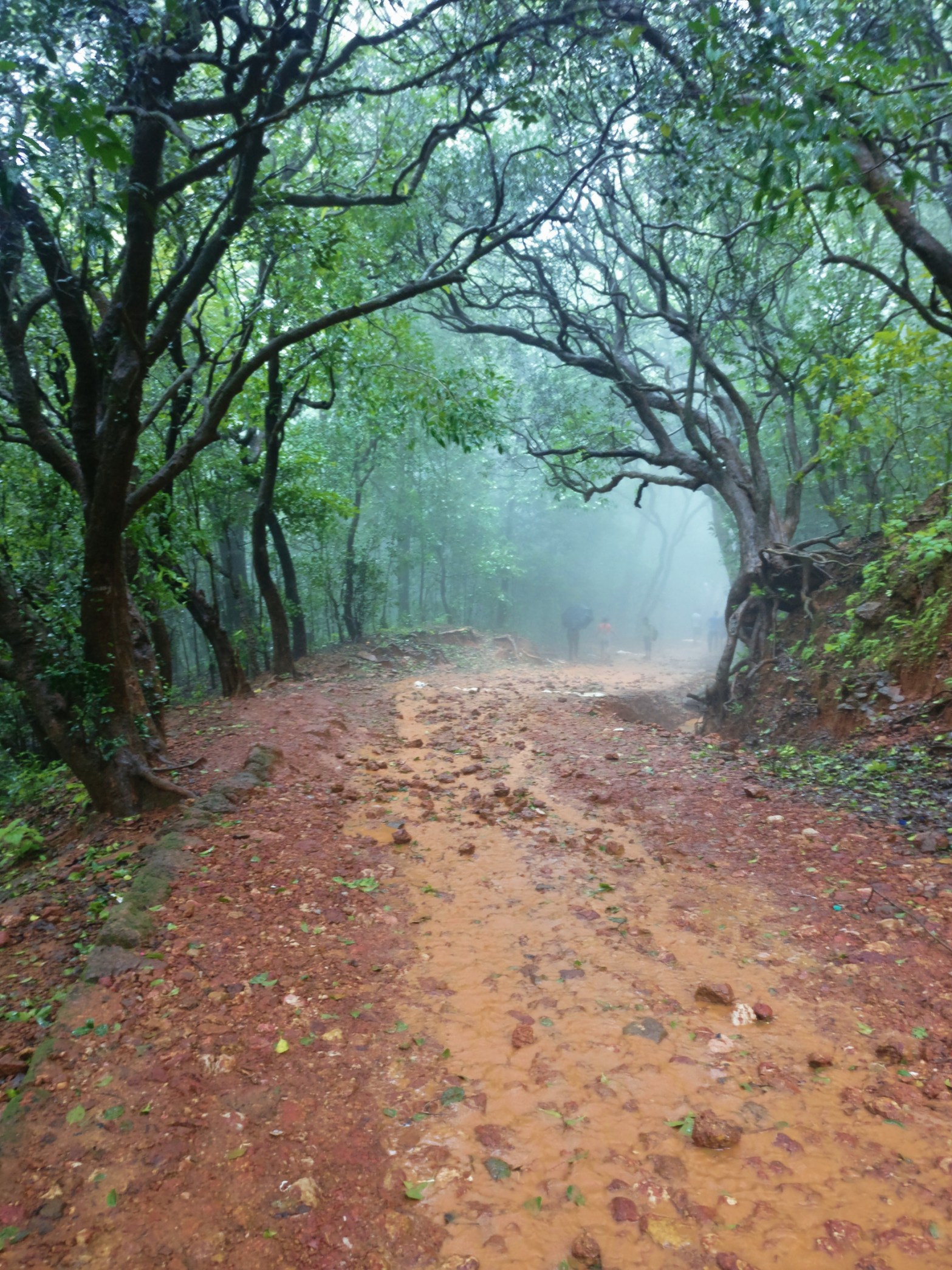
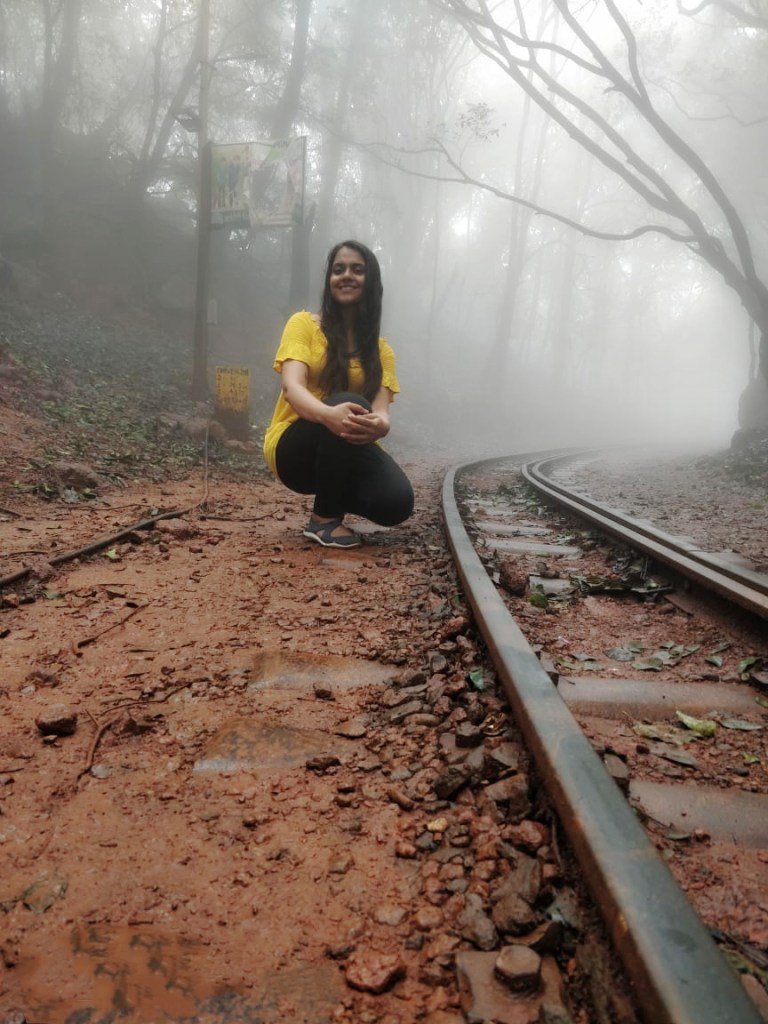
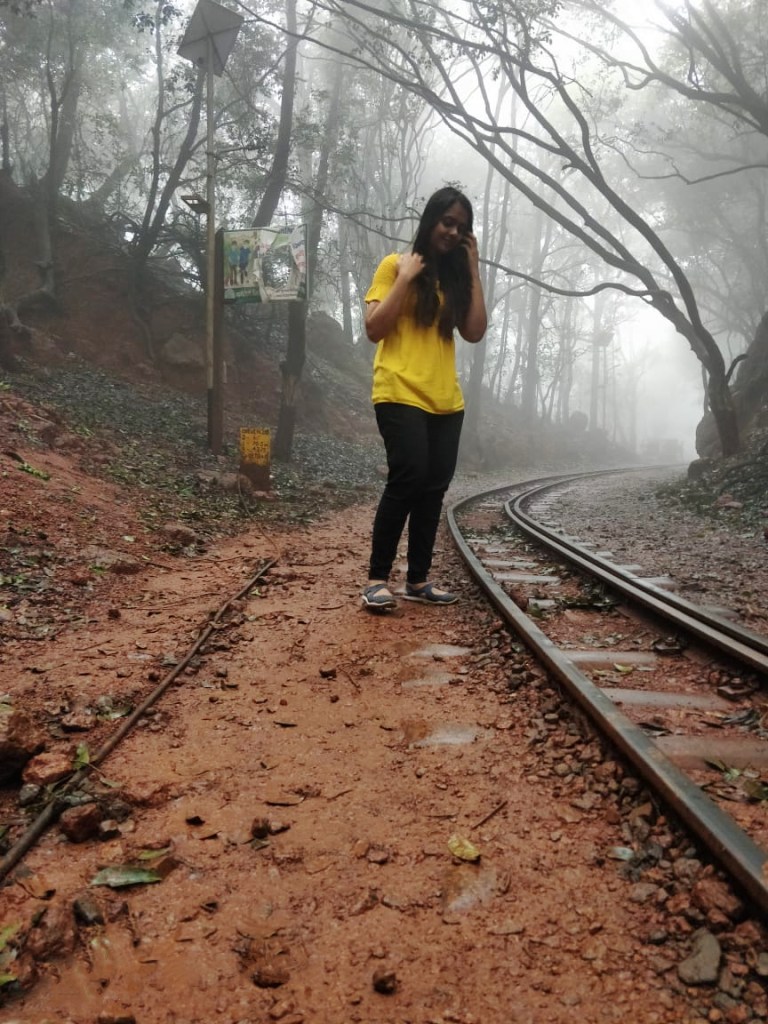
As you ramble on, you will cross a small winding curve. It is filled with trees which cover the skies, so sun-rays can’t penetrate. The effect is breathtaking.

Misty winding curve

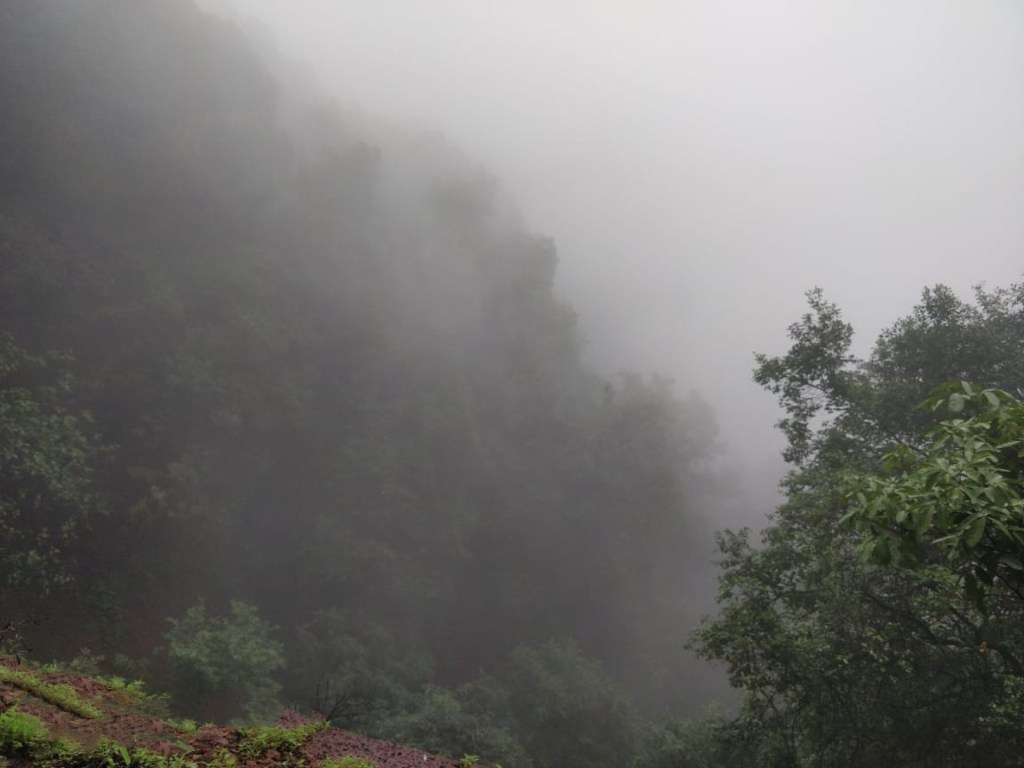
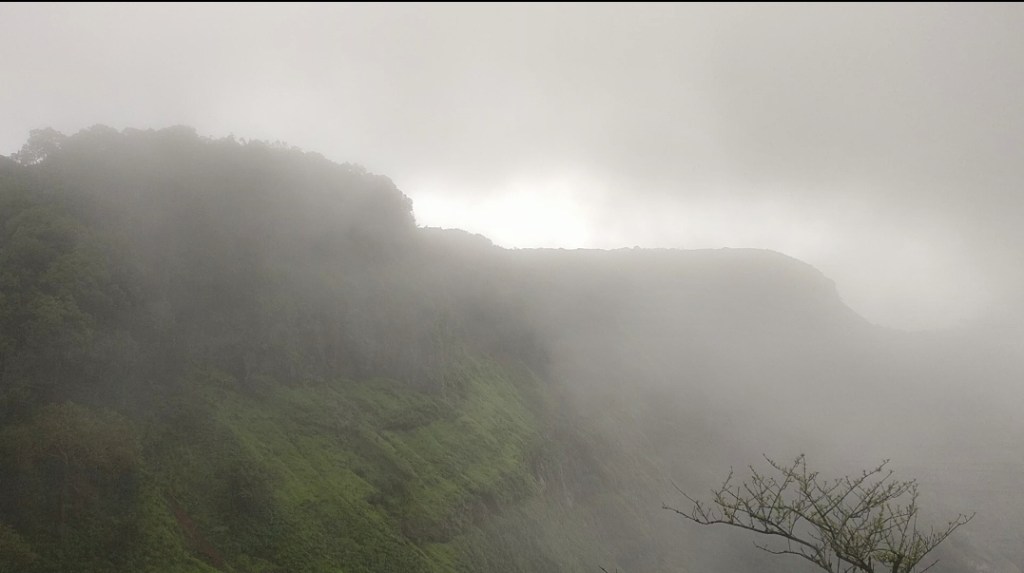
As the breeze blows and clouds drift, the view keeps changing.

The trek towards Matheran city is fun-filled and full of picturesque views.

On route to Matheran city

Once you reach Matheran city, eat something before you starting your trek. Just BEWARE OF MONKEYS pouncing on you the moment you have any edible item in your hands. So, it is better to finish your food at small tapris/shops/restaurants before stepping out in the open area.

Sightseeing Points

To be honest, Matheran is a crowded and dirty place with youngsters and horses bustling around. So, if you are looking for a trek with fewer people, it is not the place for you. But if you can endure this for initial 30 min and start walking towards the points, the view gets better and it will be a nice change of pace.

Though there are 38 sightseeing points, the popular ones are: Echo point, Louisa Point, Khandala Point, Porcupine point, Charlotte lake, Honeymoon Point, Panorama Point, One Tree Hill, Alexander point, Monkey point. If you want to cover around 10 points in a day, it will take take you about 5-6 hours on a normal pace. You can also ride your way on a horseback!

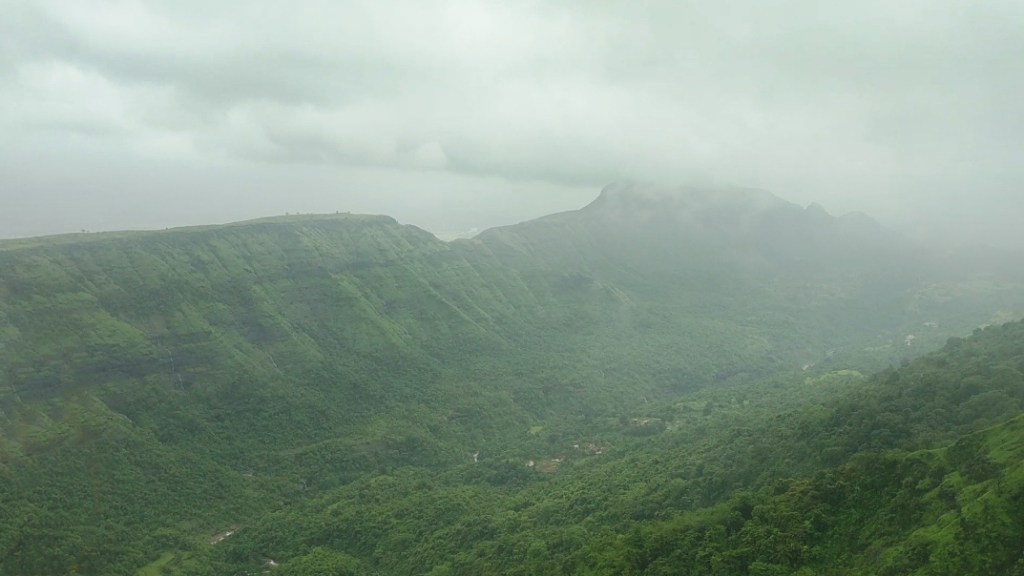
First is Khandala point. A bit crowded but you will get a good view of Khandala hills. A little stroll here will only take around 20-minutes or so.

Way to Khandala point
Khandala point

Most of the sightseeing points are one after the other on the same route and it requires a bit of walking for 2-4kms. Now, this looked like a fair distance to walk, but amidst heavy downpour and winds, it kind of felt like an eternity. That being said, it was totally worth it to see.

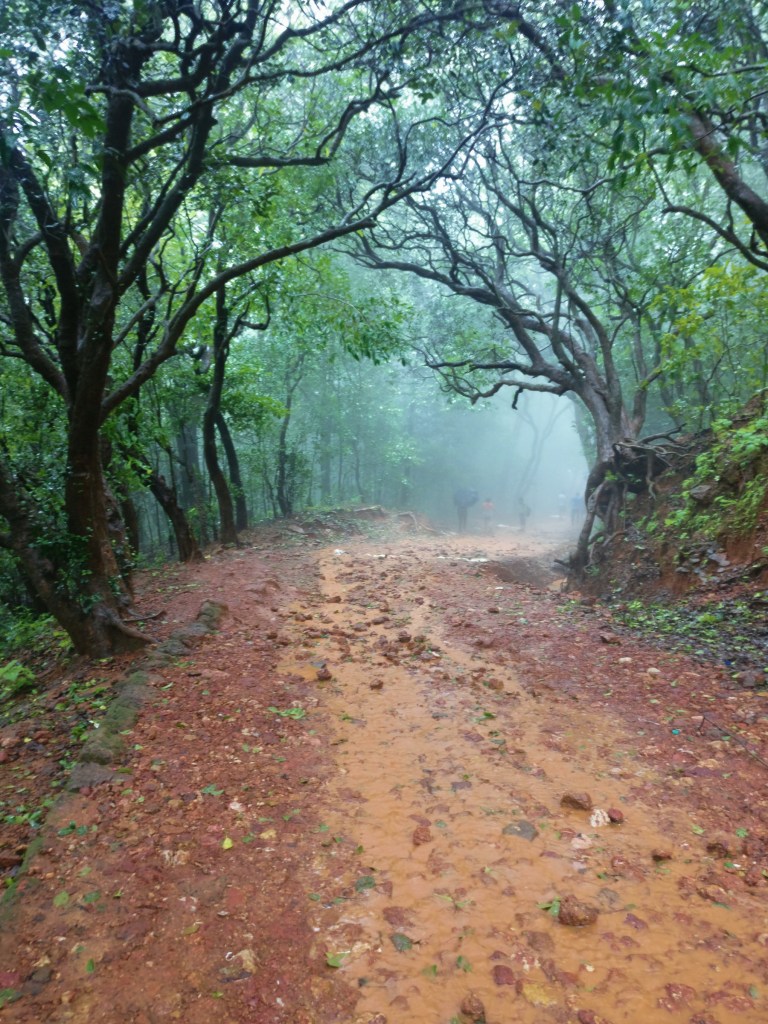
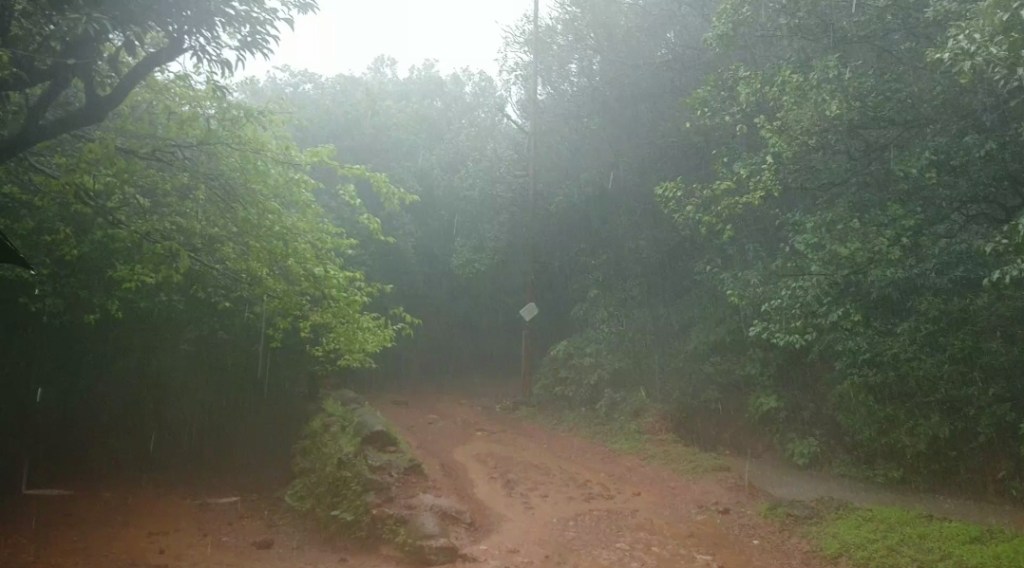
Roads are made of red laterite earth

The deeper you go inside the forest, the crowd gets thinner and you can enjoy a quiet trek.

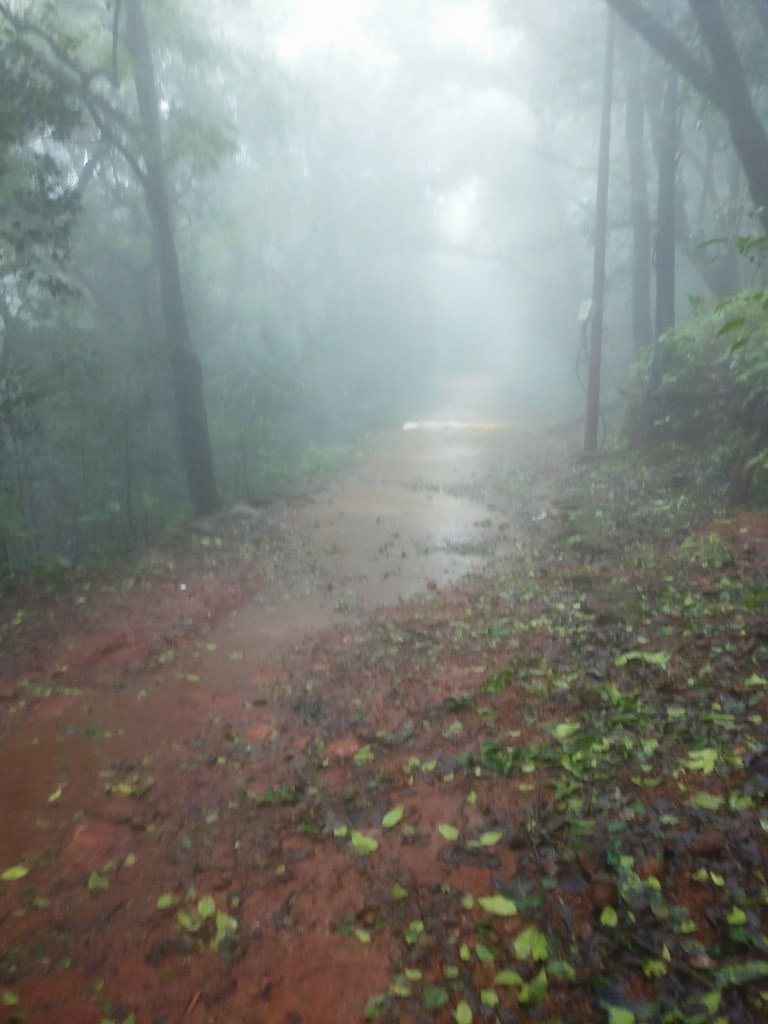
Trek through the mist filled paths

When you will reach this fork, the higher elevated path will lead to louisa point and charlotte lake. It is around 2 kms walk from this point.

Upper route for Louisa point

Once we reached Louisa point, we were in awe at the sight before us.

Louisa point

I could not take pics of Charlotte lake as it was raining heavily. As the rains increased, we decided to go back. The journey back was equally fun-filled and mesmerizing.

Journeying back
Views along the way

I would recommend that if you want to get back to Mumbai the same day, you can start walking back by 4pm as the journey downwards will tire you further(unless you plan on taking the toy train). If you want to stay at Matheran for the night and go for early morning trek to some of the nearby areas, there are many budget stays which start from Rs.400/night (online booking available).

3 things that I liked about Matheran

It is a good trekking place for beginners who are looking for a 1-day getaway from Mumbai.

Variety of landscapes which will give you good photographs

It is just 2 hrs from Mumbai and will cost minimum Rs. 300/person and for the views that you get to see, it is worth it!

Fear of new beginnings

Do the thing you fear the most and the death of fear is certain.
— Mark Twain

When I thought of starting my blog, initially I was scared that it would be a failure. Then I thought of the first time when I had the same thought while travelling. It was back in 2011 when I traveled to Pangot, Uttrakhand.

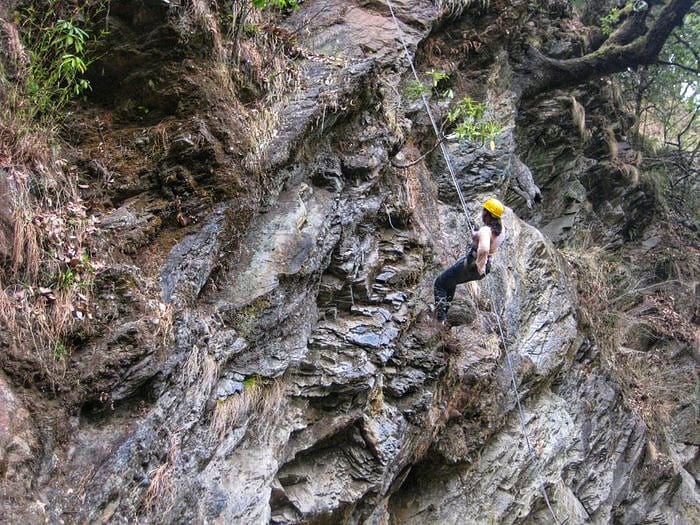
I realized my fear of heights during rappelling in Pangot. On that fine morning, when the instructor showed how rappelling is done, it looked very easy and smooth. As I ascended the rock and looked down, my heartbeat fastened and I felt I would fall and die. My legs were jammed in one place and even though the trainer kept saying it is safe and nothing would happen, I feared either the rope would break or loosen and I would injure myself. I waited there and after a while, mustered up some courage and went. I was all set for rappel with harness in place around my waist and positioned myself along the edge. But an sense of unease prevailed for what was about to come next and I prayed for this experience to get over at the earliest.

I started the descend as instructed and the sense of uneasiness started washing over. Though I was steady but it was not a smooth ride. After a point, it became tough due to the shape of the rock and exhaustion only worsened it. Instead of listening to the instructor, I hastily stepped at what seemed like a sure footing and hit the rock. Thanks to the helmet, I did not hit my head. As I hit the rock, I lost my balance and kept hanging loosely from the rope. Due to this, the rope tied around my waist tightened and my arms continued to scrape and bruise along the rough edges of rock. I completed remainder of the process by scraping and hanging as I was too nervous to place my feet back on the rock. When I finally touched ground, I was relieved. I was in pain, not only because of the bruises on my arms and waist but also as I had torn the sleeves of my top. I was upset because only a few people got injured and I was among them. I felt weak and that lowered my self-esteem.

After two days when the pain subsided, I thought it was better to have suffered this pain than not having experienced it at all. Had I given up initially, I would have only known that I fear heights. But by going through with this adventure, I knew for sure that I will overcome it eventually. The thought of facing my fear and overcoming it was far bigger than the pain suffered in the process.

I had the same resistance and fear while starting this blog. But when I looked back to my first experience in adventure sports and how I have evolved since then, I just knew I have to start writing, no matter the results. Because even if I may not succeed immediately, with continuous effort, that will happen.

Design a site like this with WordPress.com
Get started